Newsletter Subscribe
Enter your email address below and subscribe to our newsletter

 ByJohn A
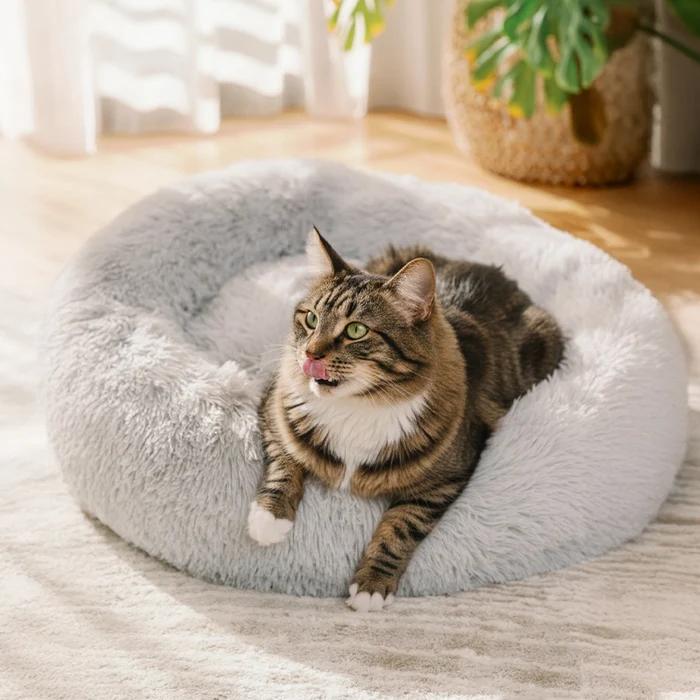
Cats may spend much of their day sleeping, but that does not mean every sleeping space supports their comfort equally. As more pet owners pay attention to feline wellness, enrichment, stress management, and indoor comfort, the role of a cat’s resting environment is receiving more attention. A thoughtfully chosen calming bed for cats can become more than a soft place to sleep. It can provide a familiar retreat where a cat can relax, observe its surroundings, and feel secure.
This shift reflects a broader trend in pet care. Rather than focusing only on food, grooming, and veterinary visits, owners are increasingly considering how the home environment affects a cat’s daily behavior. Rest, privacy, temperature, texture, and personal space can all influence how comfortable a cat feels.
Creating a better resting environment does not require completely changing the home. Understanding what cats naturally seek can help owners make simple, practical choices that support relaxation while fitting naturally into everyday living.
Pet wellness has expanded beyond basic physical care. Owners are becoming more interested in the connection between their pets’ surroundings, behavior, and overall quality of life.
For cats, this is especially relevant because they are creatures of habit. They often develop strong preferences for particular locations, textures, temperatures, and levels of privacy. A cat may repeatedly return to one corner of a room, a particular chair, or a quiet spot near a window because that location provides something it finds reassuring.
A comfortable resting area can support these natural preferences instead of forcing a cat to adapt to an unsuitable environment.
Several aspects of feline wellness are now commonly considered together:
The goal is not to create a complicated setup. It is to understand what makes a cat feel comfortable and provide an environment that accommodates those needs.
See also: What Makes Polycarbonate Roof Light Domes a Practical Daylighting Choice?
Comfort means something different to every cat. One cat may prefer an open cushion where it can stretch out, while another may choose a partially enclosed space that feels more private.
Security is often connected to visibility. Cats like being able to monitor their surroundings while remaining comfortable. This explains why some cats choose furniture, shelves, window areas, or other locations that provide a clear view of the room.
The position of a bed can therefore matter almost as much as the bed itself.
A resting area may work particularly well when it is:
A quiet location does not necessarily mean an isolated location. Many cats prefer to remain close to their people while still having their own space. A bed placed in a calm corner of a commonly used room can offer this balance.
Rest and enrichment may seem like separate parts of cat care, but they are closely connected. Cats need opportunities to explore, observe, play, and engage with their environment. They also need uninterrupted periods of rest after those activities.
A well-designed home can support both.
For example, a cat may enjoy watching birds through a window, exploring a scratching post, playing with a toy, and then returning to a familiar resting spot. This creates a natural rhythm between activity and recovery.
Resting spaces can also become part of a cat’s environmental map. When a particular location consistently feels safe and comfortable, the cat may begin to associate it with relaxation.
This is particularly useful in busy homes where there are changes in sound, movement, or household activity throughout the day.
The surface of a resting area can influence whether a cat chooses to use it. Cats are sensitive to texture and may reject a bed simply because the material feels unfamiliar or uncomfortable.
Softness is important, but it is not the only consideration. A surface that provides enough structure to support the body while remaining comfortable may be more appealing than something that collapses too easily.
Temperature also matters. Cats naturally seek warmer areas when they want to conserve body heat, but they may move toward cooler surfaces when they become warm.
This is one reason adaptable resting spaces can be useful. The cat should be able to choose where and how it wants to settle rather than being restricted to one type of environment.
Materials should also be practical for everyday use. Since cats shed hair and occasionally track litter into their resting areas, easy maintenance can make it simpler for owners to keep the space clean and inviting.
A peaceful cat area does not need to look like a dedicated pet room. In many homes, the best approach is to integrate the resting space into existing furniture and room layouts.
The Brooklyn, for example, reflects the idea that a cat’s resting area can be considered part of the home rather than something that has to be visually separated from everyday living.
When creating a calm corner, consider the surroundings as carefully as the bed itself. A location beside a loud appliance may undermine the comfort of an otherwise excellent resting surface. Similarly, placing a bed directly in a busy walkway may make a cat less likely to use it.
A few simple environmental adjustments can make a meaningful difference.
Cats often respond well to consistency. Once they become comfortable with a particular resting location, frequent changes can make the space less appealing.
Try to avoid regularly moving the bed from one part of the home to another unless there is a practical reason to do so.
Some cats prefer elevated resting spots because they provide a broader view of their environment. Others feel more comfortable closer to the floor.
If possible, observe where your cat naturally chooses to rest. Its existing preferences can provide useful clues about the type of space it may enjoy.
A resting area should not be positioned where people constantly walk past, children frequently play, or household equipment creates sudden noise.
Reducing interruptions allows the cat to settle without repeatedly becoming alert.
One of the easiest mistakes in creating a cat-friendly home is assuming that every cat wants the same thing.
Age, personality, habits, body size, activity level, and previous experiences can all influence a cat’s preferences. Some cats enjoy enclosed spaces, while others prefer open beds. Some seek warmth, while others deliberately choose cooler surfaces.
Rather than relying entirely on general recommendations, owners can pay attention to behavior.
Watch where the cat sleeps naturally. Notice whether it prefers corners, open spaces, elevated surfaces, or locations near people. Observe whether it moves away from household activity or seems interested in watching it.
These observations can help guide decisions more effectively than choosing a resting space based only on appearance.
A comfortable resting environment works best when it is considered alongside other aspects of feline care.
Cats benefit from a balance of stimulation and downtime. Interactive play can encourage physical activity and mental engagement, while quiet areas give them opportunities to recover.
Food and water should also be placed thoughtfully. Although cats can adapt to many household arrangements, separating key resources can help create a more organized environment.
Litter box placement deserves attention as well. Resting areas should generally feel clean and separate from areas associated with waste.
The overall objective is to create a home where different needs have their own appropriate spaces.
Improving a cat’s resting environment does not have to involve a major redesign. Small changes can make an existing space more appealing.
For example, moving a bed away from a drafty area, placing it near a preferred window, or choosing a texture the cat already enjoys can encourage more consistent use.
Owners can also provide more than one resting option. This allows the cat to select a location based on its mood, activity level, temperature, or desire for privacy.
Multiple options may be particularly helpful in households with more than one cat. Each animal may have different preferences, and having separate resting spaces can give cats greater control over where they relax.
Cats sleep frequently, so changes in sleeping behavior can sometimes be easy to overlook. However, noticeable changes in where, how, or how often a cat rests may be worth observing.
A cat that suddenly avoids a previously favored resting area could be reacting to a change in the environment. New sounds, furniture, household activity, temperature, or unfamiliar smells may affect its comfort.
Behavioral changes can also have other causes. If a cat shows a significant or persistent change in sleep, appetite, movement, grooming, or general behavior, discussing it with a veterinarian is appropriate.
A comfortable resting space should support wellness, but it should never replace professional care when a health concern may be present.
As pet owners continue to think more carefully about animal wellbeing, cat-friendly design is likely to become increasingly integrated into everyday home environments.
This does not necessarily mean adding more pet products. Instead, it means designing spaces around how cats naturally interact with their surroundings.
Window access, vertical areas, quiet corners, comfortable textures, hiding spaces, and flexible resting locations can all contribute to a more thoughtful environment.
The growing interest in pet wellness also encourages owners to consider quality rather than simply quantity. A home does not need dozens of accessories to be enriching. It needs spaces that serve genuine behavioral and comfort needs.
This approach can benefit both cats and their owners. When a cat has a dependable place to rest, observe, and retreat, the home can feel more organized and comfortable for everyone.
A cat’s resting space may appear to be a small part of the home, but it can influence how the animal interacts with its surroundings. Comfort, security, predictability, and personal choice all contribute to a positive environment.
The best solution is rarely about following one universal formula. Instead, it begins with paying attention to the individual cat. Where does it naturally sleep? Which textures does it choose? Does it seek privacy or prefer to stay close to people? Does it enjoy elevated locations or open spaces?
These observations can turn an ordinary corner into a meaningful retreat.
As modern pet care continues to focus more heavily on holistic wellness, creating intentional spaces for rest is becoming an important part of responsible cat ownership. A thoughtfully arranged environment gives cats opportunities to relax on their own terms while allowing owners to better understand their everyday needs.
Ultimately, a comfortable home is one where a cat can move between activity, exploration, companionship, and quiet rest with ease. If you are looking to create a more welcoming environment for your cat, start by observing what makes it feel secure, then build around those natural preferences. Get in touch with the right approach for your home and focus on creating a resting space that feels genuinely comfortable, familiar, and inviting for your cat.