
Newsletter Subscribe
Enter your email address below and subscribe to our newsletter

 ByJohn A
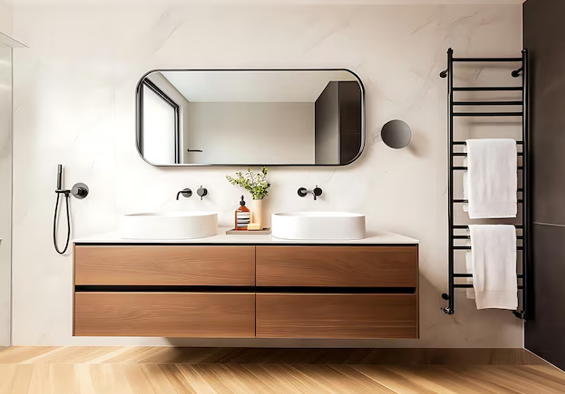
A bathroom mirror needs to do more than provide a clear reflection. Its size, shape, position, and surrounding details can affect how the entire vanity area looks and functions. A bathroom vanity and mirror should be considered together because the two features need to share the same visual proportions while leaving enough room for lighting, storage, and everyday use. A well-planned combination can make the bathroom feel organised without requiring unnecessary decorative elements.
The vanity is usually the strongest visual reference for choosing a mirror. Its width, height, cabinetry, basin placement, and countertop shape can all influence the size and position of the glass.
A mirror that is noticeably narrower than the vanity can leave the wall looking unbalanced. A mirror that extends too far beyond the vanity may compete with nearby cabinets, lights, or wall features.
Before selecting a mirror, measure:
These measurements provide a practical starting point and reduce the chance of choosing a mirror that does not suit the available wall.
See also: What to Know Before Choosing a Single Tooth Dental Implant
The size of the bathroom should also influence mirror selection. A large mirror can work well across a spacious vanity, while a smaller bathroom may benefit from a more carefully proportioned design.
A wide mirror can visually connect two basins and create a unified appearance across a double vanity. For a single basin, a vertically oriented mirror may provide a stronger sense of height.
The ceiling should also be considered. A tall mirror can draw the eye upwards, while a wider design can emphasise the horizontal width of the vanity area.
Rectangular mirrors are common because they work naturally with straight vanity cabinets and countertops. They are not the only option.
Round and oval mirrors can soften a bathroom filled with angular cabinetry, tiles, and fixtures. Arched mirrors can add a more distinctive architectural detail without requiring additional wall decoration.
Geometric designs may suit bathrooms with contemporary fixtures and clean lines. The choice should relate to the existing room rather than being made in isolation.
Useful visual references include:
Repeating a subtle curve or proportion can make the mirror feel connected to the rest of the bathroom.
A mirror should have enough breathing room to remain visually clear. Installing it too close to the ceiling, side walls, lighting, or cabinetry can make the vanity area appear crowded.
The distance above the countertop also deserves attention. The lower edge should be high enough to avoid interfering with taps and daily bathroom activities, while the upper edge should remain accessible to people using the space.
For shared bathrooms, the mirror height may need to accommodate several people. A practical installation should provide a useful reflection without forcing users to adjust their position constantly.
Lighting and mirrors work closely together. A mirror can reflect light around the room, but its position should also allow users to see their faces clearly during grooming.
Wall lights can be placed beside the mirror, while some bathroom layouts use lighting above it. Backlit mirrors can provide another option, particularly in bathrooms where a cleaner wall arrangement is preferred.
Avoid placing strong lighting directly behind the person using the mirror. This can create shadows across the face and make the mirror less useful.
Consider these lighting factors during planning:
Planning these details before installation can prevent awkward adjustments later.
The frame can change the character of the vanity area. Frameless mirrors have a simple appearance and can work particularly well with minimalist bathrooms. They also allow the wall, tiles, and cabinetry to remain visually prominent.
Framed mirrors introduce another design element. Timber, metal, painted, or decorative frames can coordinate with tapware, handles, shelving, and other bathroom finishes.
The frame should also suit the scale of the room. A thick decorative frame may look out of place in a compact bathroom, while a very thin frame might lack presence above a large vanity.
Bathroom mirrors are regularly exposed to steam, splashes, cleaning products, and humidity. The surrounding materials should therefore be selected with the environment in mind.
Edges deserve particular attention. Excess moisture should not be allowed to sit around the perimeter of the mirror for extended periods. Regular cleaning with suitable non-abrasive materials can help maintain a clear surface.
A simple cleaning routine can include:
Good maintenance can preserve the appearance of the mirror and keep the vanity area looking tidy.
Many bathrooms combine mirrors with storage through mirrored cabinets or recessed shelving. This can be useful in smaller rooms where wall space needs to serve more than one purpose.
A mirrored cabinet can provide storage for everyday items while maintaining the reflective function of a traditional mirror. The cabinet doors also need enough clearance to open comfortably without hitting nearby lights, walls, or other fixtures.
For a simple mirror installed above a vanity, shelves or cabinets can be positioned beside it instead. This arrangement can create useful storage without making the mirror itself bulky.
Mirror installation involves more than placing glass against a wall. The wall surface, mounting method, mirror weight, dimensions, and final position all need to be considered.
Large mirrors can require additional care during handling and installation. A small positioning error may become obvious once the mirror is aligned with the vanity, tiles, tapware, and lighting.
Luxurious Glass LLC can assist with residential glass and mirror projects where accurate measurements, suitable mounting methods, and careful installation are required. Professional fitting can also help reduce the risk of an uneven finish or damage caused by improper handling.
The strongest vanity areas usually have a clear relationship between the mirror, countertop, lighting, and surrounding wall. No single feature needs to dominate the room.
A mirror can provide practical value while also helping establish the visual character of the bathroom. Its proportions should suit the vanity, its position should support comfortable daily use, and its materials should work with the conditions of the room.
Choosing the glass after measuring the vanity and considering the surrounding fixtures makes the process more straightforward. Contact us today to discuss your bathroom mirror requirements and find an option that fits your space, layout, and design preferences.
